
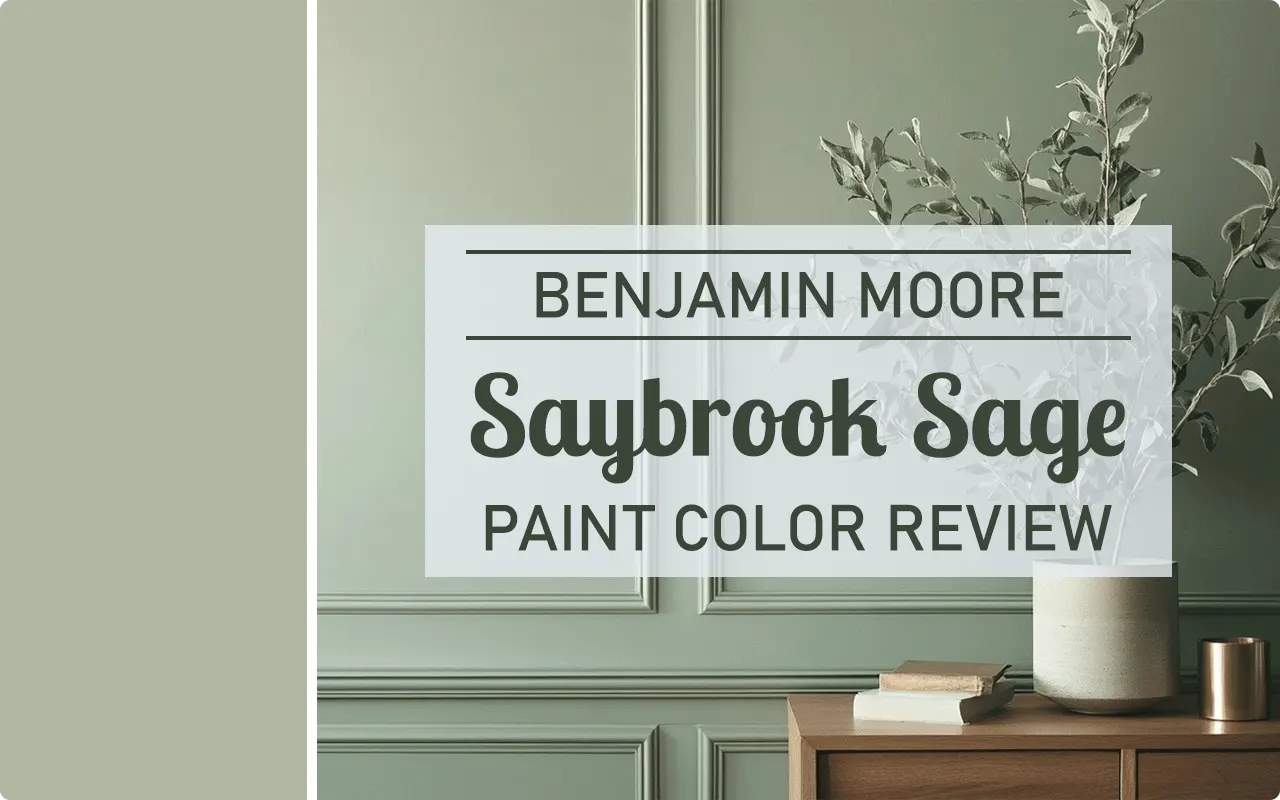
I have a soft spot for colors that don’t scream for attention but somehow make every room feel better. Saybrook Sage HC-114 is exactly that kind of color. It sits quietly on the wall, muted and grounded, and yet it completely transforms a space without making it feel overdone.
I first came across this color when I was looking for something that felt earthy but not too heavy, green but not too bold. Saybrook Sage kept coming up, and honestly, the more I looked at it, the more I got it. It has this understated quality that a lot of trendy colors just don’t have.
What makes it special is that it works in a lot of different spaces without feeling out of place. It’s not a color that demands a certain style or aesthetic. Traditional home? It fits. Modern farmhouse? It fits. A cozy cottage bedroom? Absolutely fits.
If you’re someone who wants a color with some character but doesn’t want to go overboard, Saybrook Sage is worth your serious attention. Let me walk you through everything you need to know about it.
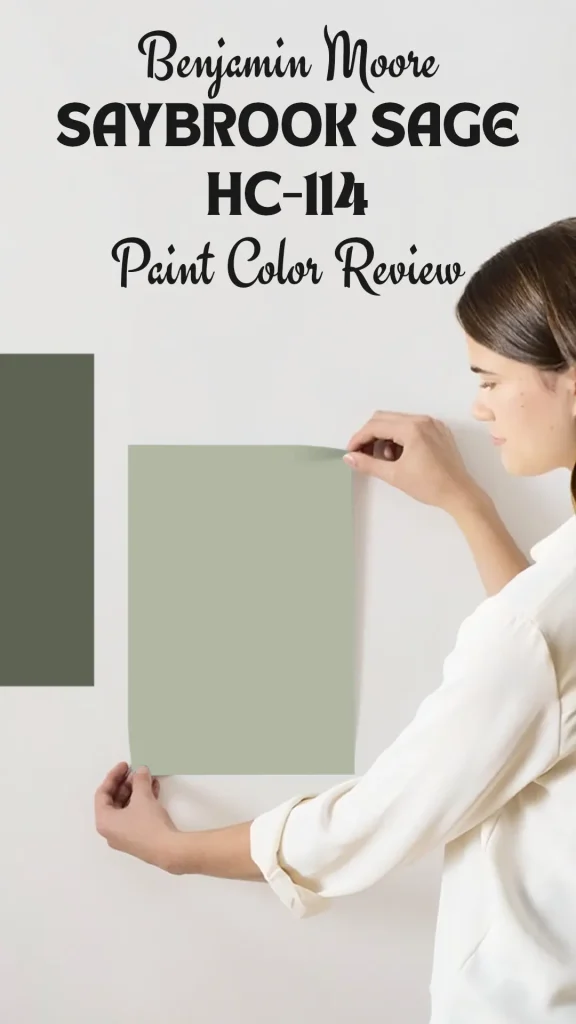
What Color is Benjamin Moore Saybrook Sage HC-114?
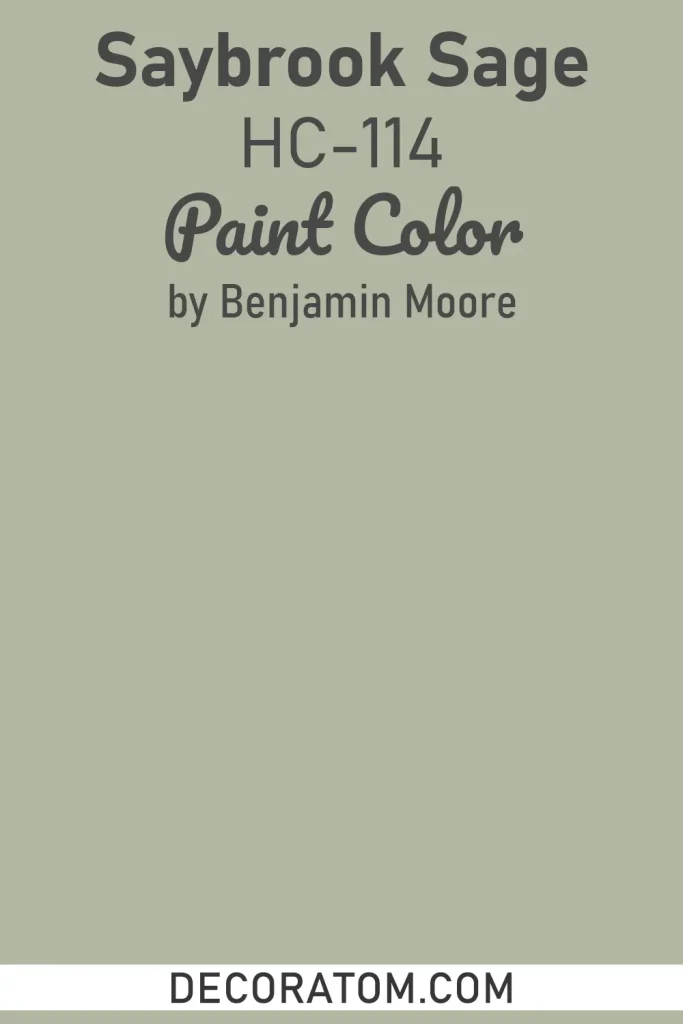
Saybrook Sage HC-114 is a muted, soft green with gray undertones that give it a dusty, weathered quality. It’s not a bright or saturated green — think less “fresh spring leaves” and more “dried sage herb sitting on a kitchen shelf.” It reads as a sophisticated neutral in many spaces, which is a big part of why it’s so popular.
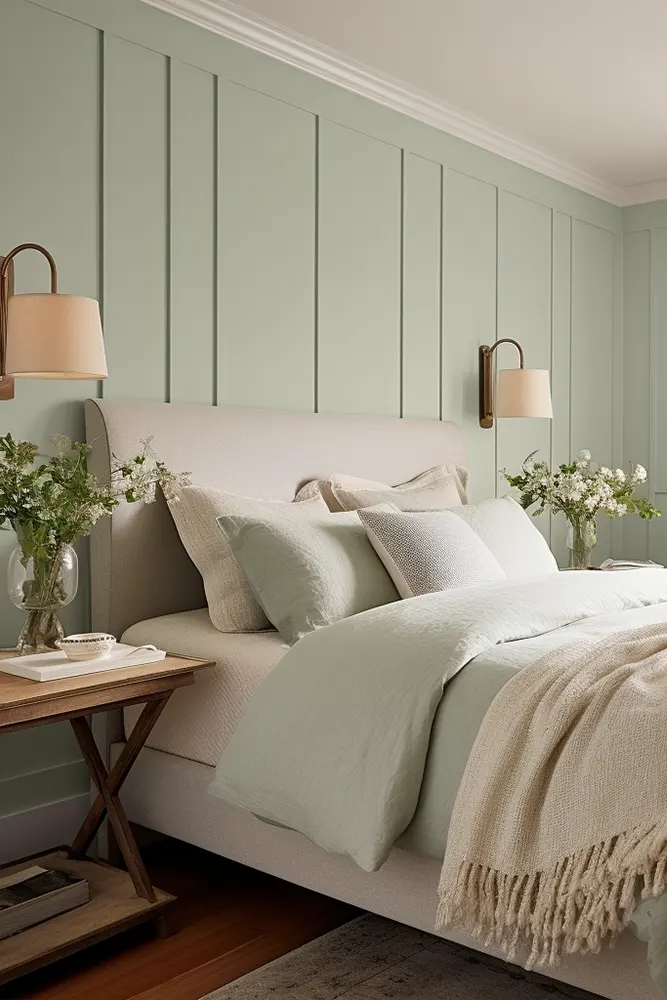
Is It a Warm or Cool Color?
Saybrook Sage leans slightly warm, but it sits right on the edge. The gray undertones keep it from feeling too warm, while the green base stops it from reading fully cool. It’s one of those in-between colors that tends to play nice with both warm and cool palettes, which makes it genuinely versatile.
LRV of Benjamin Moore Saybrook Sage HC-114
LRV stands for Light Reflectance Value — it simply tells you how much light a color bounces back into a room. The scale runs from 0 (pure black) to 100 (pure white).
The LRV of Saybrook Sage HC-114 is 45.46, which puts it right in the middle range. It’s not too dark, not too light.
In a well-lit room it feels airy enough, but in a room with limited natural light it can lean noticeably deeper and moodier. Something worth keeping in mind before you commit.
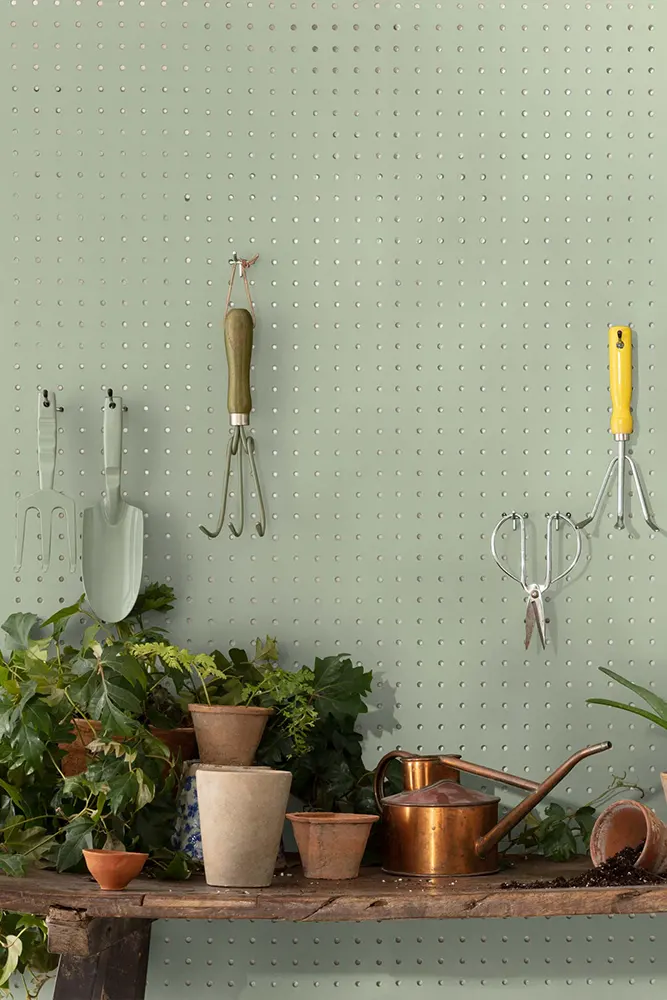
Undertones of Benjamin Moore Saybrook Sage HC-114
Saybrook Sage carries gray and slightly blue-green undertones. The gray is what gives it that dusty, muted quality — it keeps the green from looking too outdoorsy or vegetal.
In certain lighting conditions, a subtle blue can peek through, which actually makes it pair beautifully with cooler whites and blue-based grays.
The gray undertone is the dominant one though, and it’s the reason this color reads more like a sophisticated neutral than a traditional green.
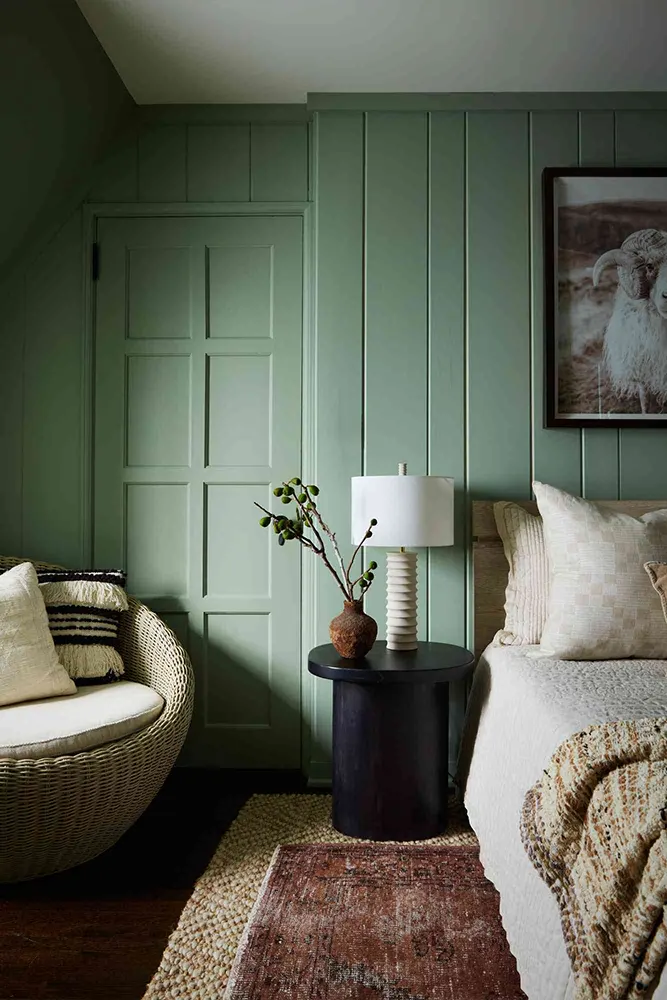
How Different Types of Lighting Affect Benjamin Moore Saybrook Sage HC-114?
Lighting changes this color quite a bit, so testing it in your specific space is a must.
In natural daylight, Saybrook Sage looks its truest — that balanced, muted sage green with soft gray comes through clearly.
In north-facing rooms with cool, indirect light, the blue-gray undertones become more prominent and the color can feel slightly cooler and darker than you might expect.
In south-facing rooms with warm, abundant light, it warms up and looks lighter, almost like a relaxed khaki-green.
Under warm artificial lighting (like incandescent or warm LED bulbs), the gray softens and the green gets a little cozier and more golden. Under cool artificial lighting, the blue undertones get pulled out more strongly.
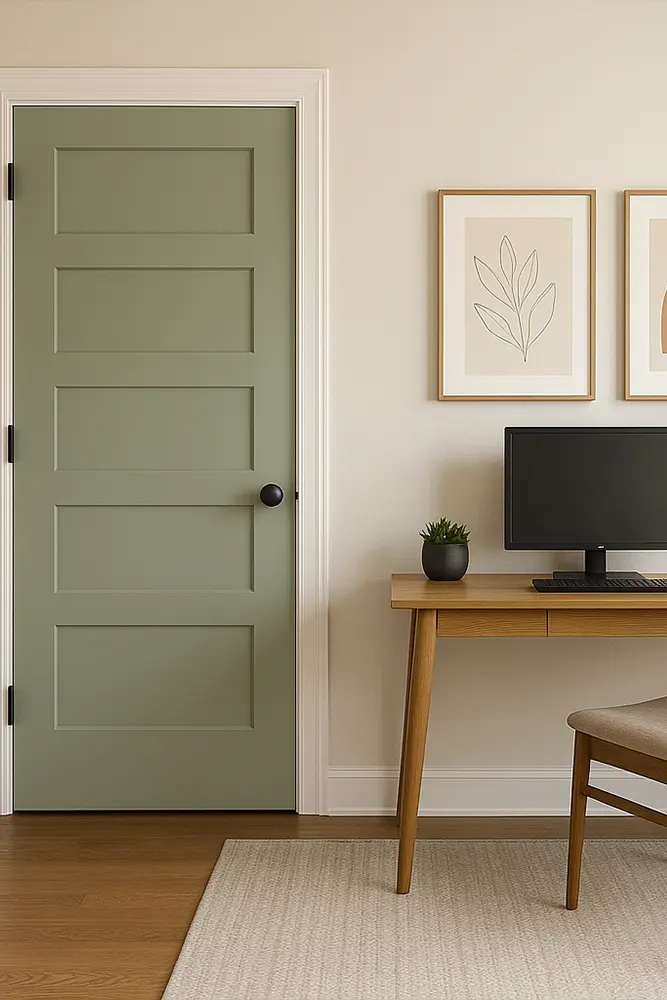
Trim Colors to Pair With Benjamin Moore Saybrook Sage HC-114
For trim, you generally want something that either gives a clean contrast or harmonizes softly with the wall color. Here are my top three picks:
1. Chantilly Lace OC-65 (Benjamin Moore)
This is a crisp, clean white with no strong undertones. It gives Saybrook Sage a fresh, sharp frame without competing with it. The contrast is clear but not harsh.
2. White Dove OC-17 (Benjamin Moore)
A softer, slightly warm white that feels more relaxed next to Saybrook Sage. If you want trim that blends in gently rather than pops, this is a great pick.
3. Simply White OC-17 (Benjamin Moore)
Warmer than Chantilly Lace but brighter than White Dove — it sits nicely in between and complements the earthy quality of Saybrook Sage really well.
Colors Similar to Benjamin Moore Saybrook Sage HC-114
Finding a color similar to Saybrook Sage is actually harder than it sounds, and I say that from experience. There are plenty of greens out there, and there are plenty of gray-greens, but finding that specific balance of muted, dusty, not-too-warm, not-too-cool that Saybrook Sage pulls off — that’s where the list gets short.
I spent time comparing swatches, and what I was looking for was the same quiet sophistication without too much yellow, too much blue, or too much gray pulling the color in a completely different direction. Some of the options below are close in tone, others share the same earthy base but read slightly differently on the wall.
I’d still recommend sampling whichever ones catch your eye because even similar colors can behave differently in your specific space and lighting.
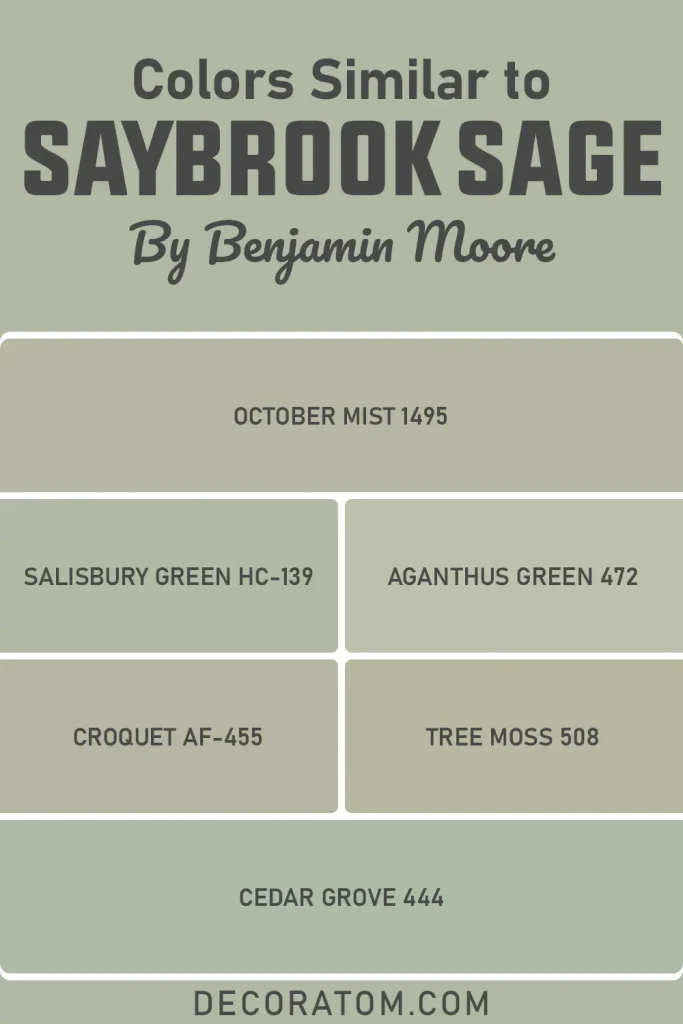
- October Mist 1495
- Salisbury Green HC-139
- Aganthus Green 472
- Croquet AF-455
- Tree Moss 508
- Cedar Grove 444
Colors That Go With Benjamin Moore Saybrook Sage HC-114
Pairing colors with Saybrook Sage is honestly one of the more enjoyable parts of working with this color. Because it’s so settled and neutral in its personality, it doesn’t fight with a lot of other colors — it just asks that you bring something that either grounds it further or brightens things up a little.
I’ve found it works best with warm, creamy neutrals that play off the earthy quality of the green, or with cooler grays that lean into the gray undertone already sitting in the color. What you want to avoid are colors that are too saturated or too bright — they tend to make Saybrook Sage look dull by comparison rather than letting it shine.
The four colors below hit the right balance and work together in a room without any one of them feeling out of place.
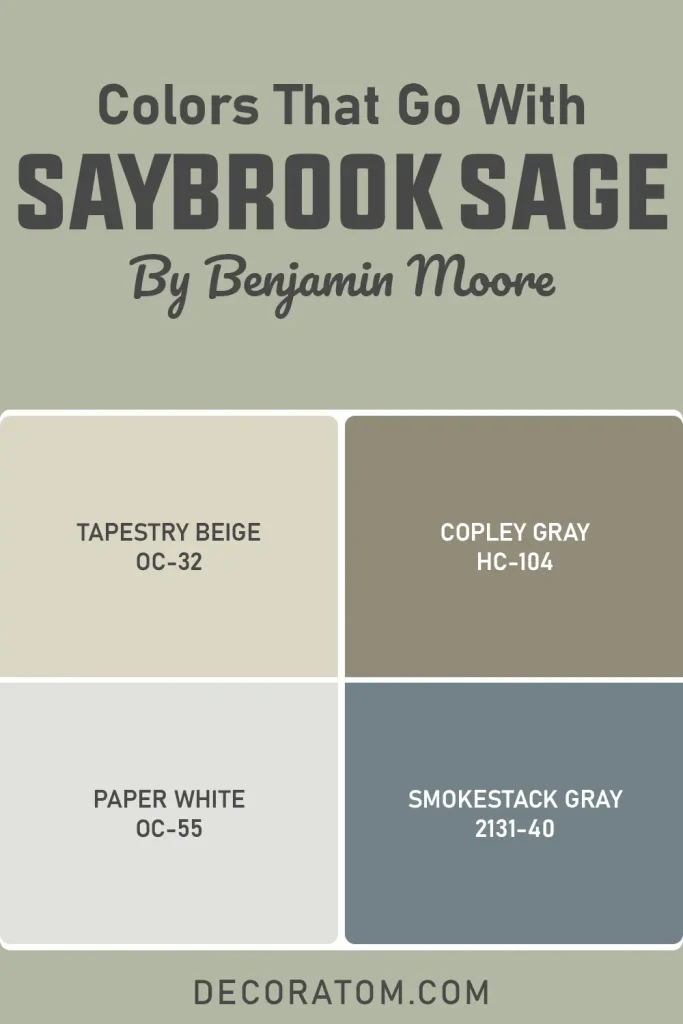
- Tapestry Beige OC-32
- Copley Gray HC-104
- Paper White OC-55
- Smokestack Gray 2131-40
Where to Use Benjamin Moore Saybrook Sage HC-114?
Saybrook Sage is one of those colors that adapts well to different rooms rather than being locked into just one use. Here’s where I think it genuinely shines:
- Living Rooms — It creates a calm, welcoming atmosphere without making the space feel heavy. Works well as a main wall color with white trim.
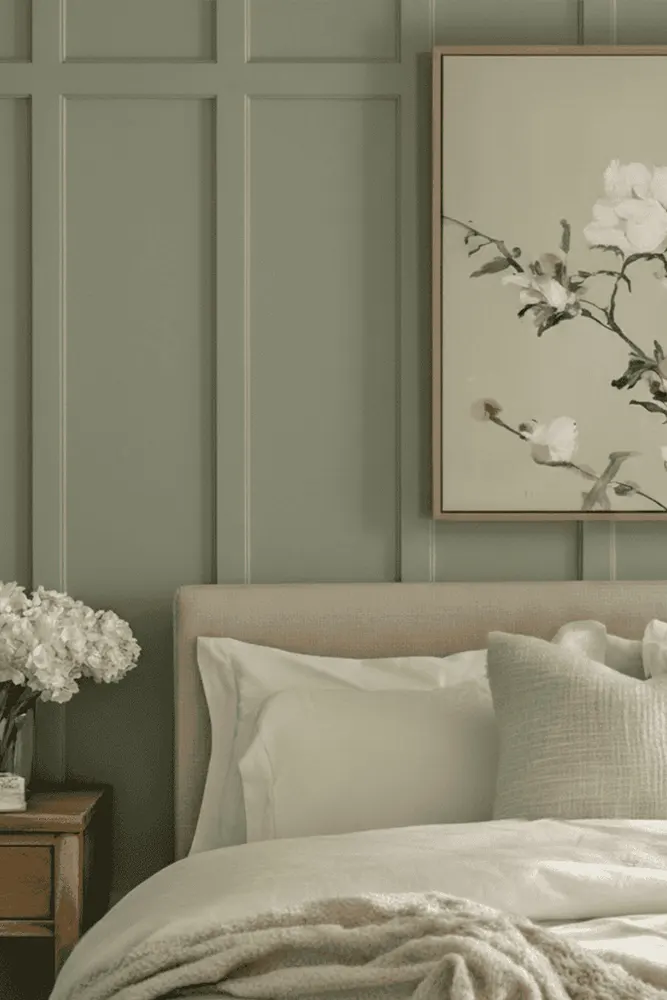
- Bedrooms — The muted, soft tone is easy to rest around. It’s not energizing or loud, which makes it a solid choice for a bedroom you want to feel like a retreat.
- Home Offices — It’s grounding without being distracting. Easy to spend long hours looking at.
- Dining Rooms — It adds just enough character and depth to make a dining room feel intentional and cozy.
- Kitchens — Especially beautiful on cabinetry or as an accent wall. Pairs naturally with wood tones and stone counters.
- Exterior Use — Saybrook Sage has a heritage, colonial quality that makes it a fantastic exterior color, especially on older or traditional-style homes.
- Mudrooms and Hallways — A great way to introduce the color without committing to a full room.
Why I Love Benjamin Moore Saybrook Sage HC-114
I’ll be honest — I wasn’t immediately obsessed with Saybrook Sage the first time I saw it on a screen. It looked a little plain. But then I saw it on a large swatch, in real light, in an actual room, and something clicked.
What I love most about it is that it doesn’t try too hard. So many greens feel like they’re making a statement, like the color is the point. Saybrook Sage just settles in and makes everything around it look better. The furniture, the trim, the wood floors — they all seem to sit better when Saybrook Sage is on the wall behind them.
I also love that it ages well in a space. It’s not a trendy color that you’ll grow tired of in two years. It has a timeless, almost historical quality to it — probably because it belongs to Benjamin Moore’s Historical Colors collection.
And practically speaking, it’s a color that photographs well, works in different lighting conditions reasonably well, and pairs with a wide range of furniture styles. That kind of flexibility is hard to find.
Final Thoughts
If you’re searching for a green that’s grounded, calm, and genuinely timeless, Saybrook Sage HC-114 deserves a real look. It’s not the color for someone who wants something bold or dramatic — but if you want a space that feels put-together and quietly beautiful, this one delivers.
My biggest piece of advice: get a large sample and live with it for a few days. Watch it in morning light, afternoon light, and under your lamps at night. It changes more than you’d expect, and you want to make sure the version you’re seeing in your specific room is the one you love.
For me, it passed that test easily.