
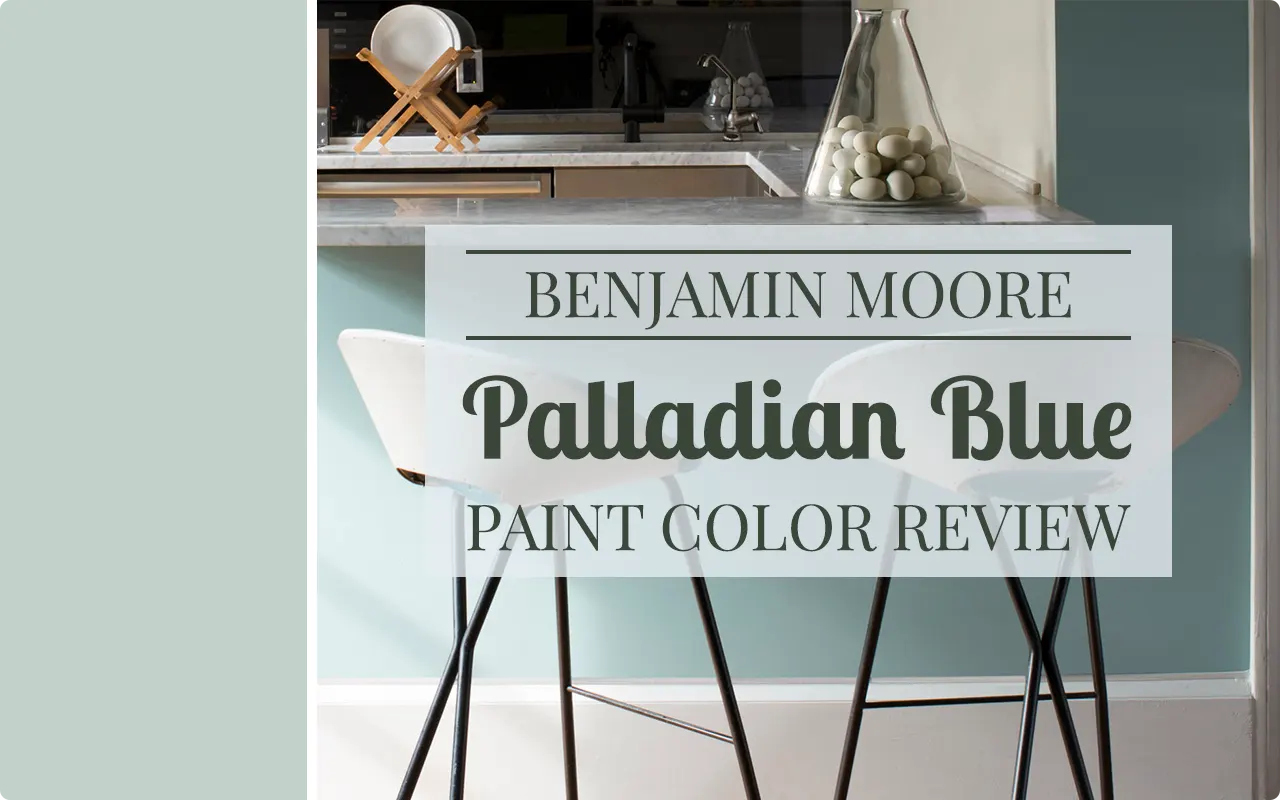
I have a soft spot for colors that feel like they belong somewhere specific — like a beach house, a sunlit porch, or a room that just makes you exhale the moment you walk in.
Palladian Blue HC-144 by Benjamin Moore is exactly that kind of color. It is one of those shades that has been quietly popular for years, and honestly, it deserves every bit of attention it gets.
I first came across this color when I was hunting for something that did not feel too bold but was not a plain, forgettable wall color either.
Palladian Blue landed right in that sweet spot. It has this soft, airy quality that makes a room feel bigger and calmer without feeling sterile or cold. It is the kind of blue that does not shout at you — it just settles in and makes the space feel more like home.
In this review, I am going to walk you through everything about this color — its undertones, how light plays with it, what to pair it with, and where it works best. By the end, you will have a very clear picture of what this color is really like on your walls.
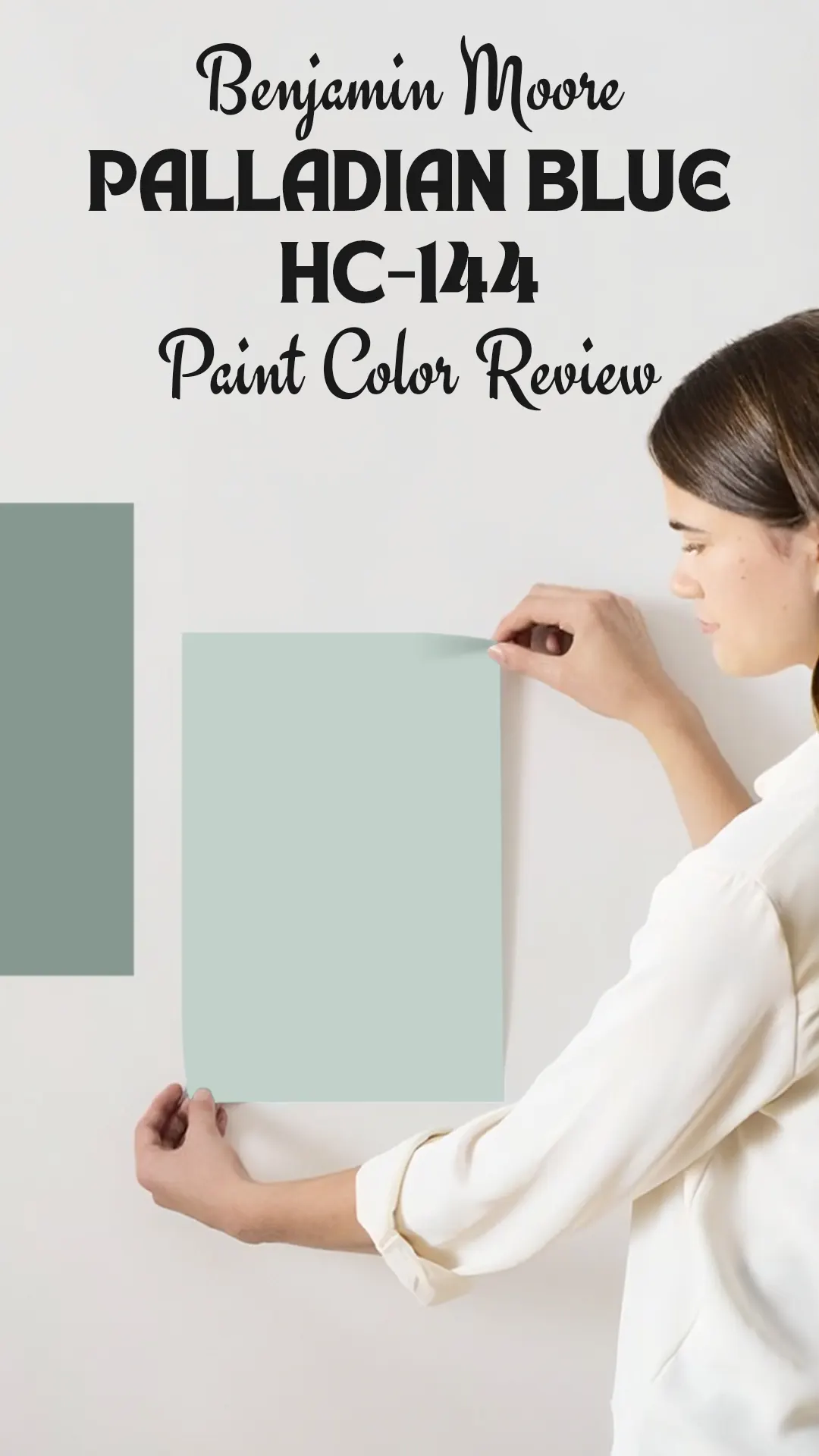
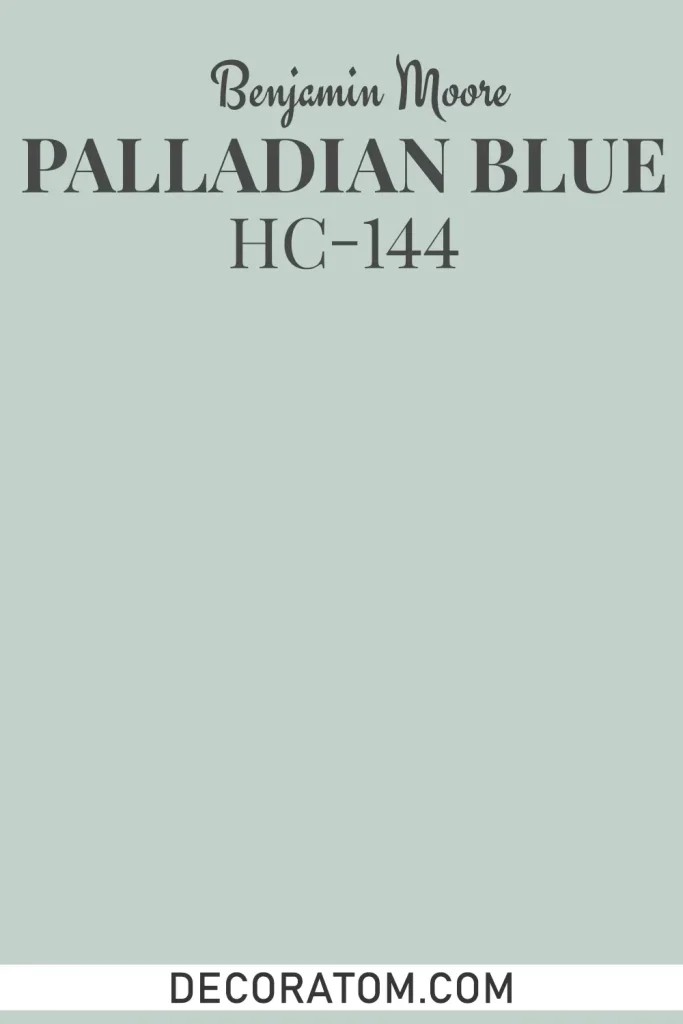
What Color is Benjamin Moore Palladian Blue HC-144?
Palladian Blue HC-144 is a soft, muted blue-green color. It sits in that comfortable middle ground between a true blue and a sage green, giving it a versatile, almost neutral feel. It is light enough to brighten up a room but has just enough color presence to make the walls feel intentional. Think of it as a dusty, vintage-inspired blue with a subtle green tint running through it.
Is It a Warm or Cool Color?
Palladian Blue is a cool color. The blue and green base naturally lean cool, and that comes through on the walls. That said, it is not a sharp, icy cool — it is soft and relaxed, which makes it much easier to live with than a stark blue.
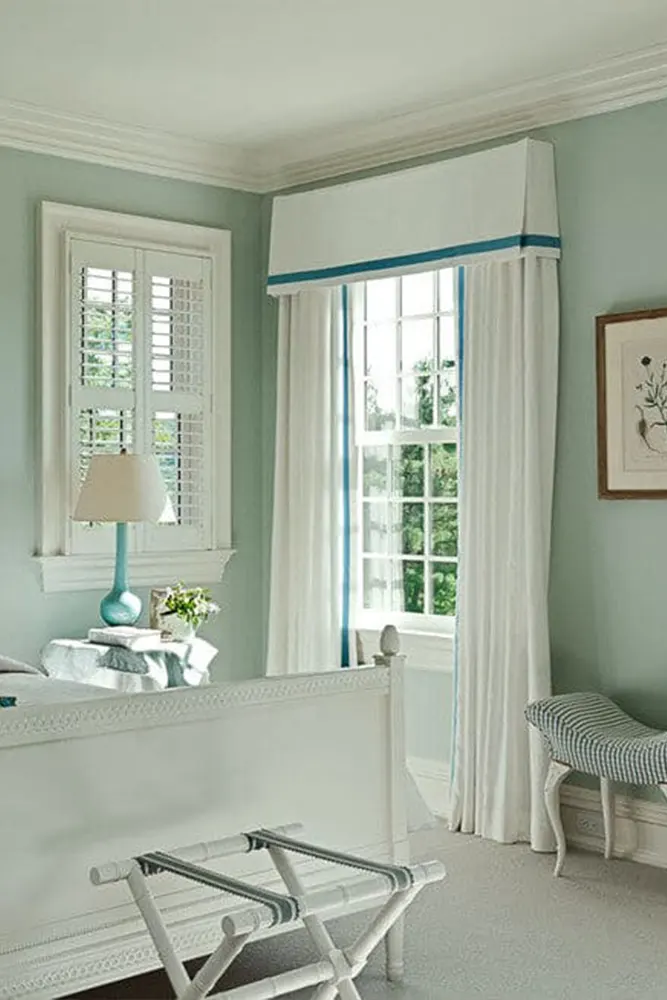
LRV of Benjamin Moore Palladian Blue HC-144
LRV stands for Light Reflectance Value, and it tells you how much light a color bounces back into a room. The scale runs from 0 (pure black, absorbs everything) to 100 (pure white, reflects everything). The higher the number, the lighter and brighter the color reads on your walls.
Palladian Blue HC-144 has an LRV of 60.4, which puts it solidly in the medium-light range. This means it reflects a good amount of light and will keep a room feeling open and airy. It is not so light that it disappears, but it is definitely not heavy either.
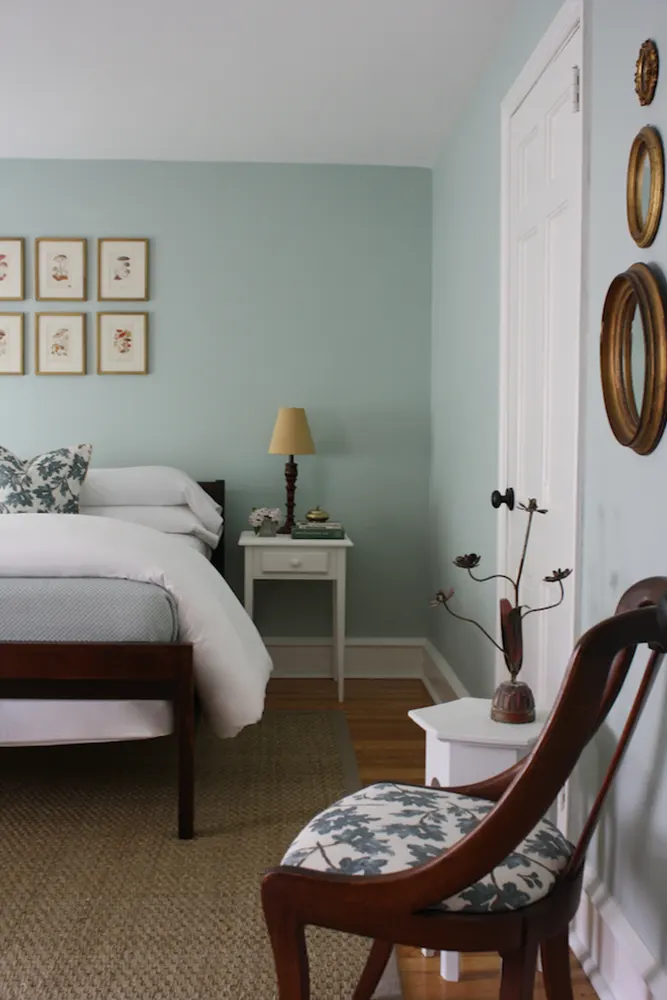
Undertones of Benjamin Moore Palladian Blue HC-144
The undertones in Palladian Blue are primarily green with a hint of gray. That green undertone is what gives it the slightly aqua or spa-like quality, and the gray keeps it grounded so it does not veer into mint or turquoise territory. Depending on what surrounds it, the green can become more noticeable or pull back — which is something to keep in mind when choosing trims and furnishings.
How Different Types of Lighting Affect Benjamin Moore Palladian Blue HC-144?
Lighting changes this color noticeably. In a room flooded with natural light, Palladian Blue looks fresh, airy, and almost aqua. In north-facing rooms with cooler light, the gray undertone steps forward and the color reads a bit more muted and serious.
Under warm artificial lighting like incandescent or warm LED bulbs, it softens and the green undertone becomes more visible. In rooms with very little light, it can go a touch darker and feel more like a traditional blue-gray.
I always recommend sampling it in the actual room you are painting — morning light, afternoon light, and evening light will all show you different sides of this color.
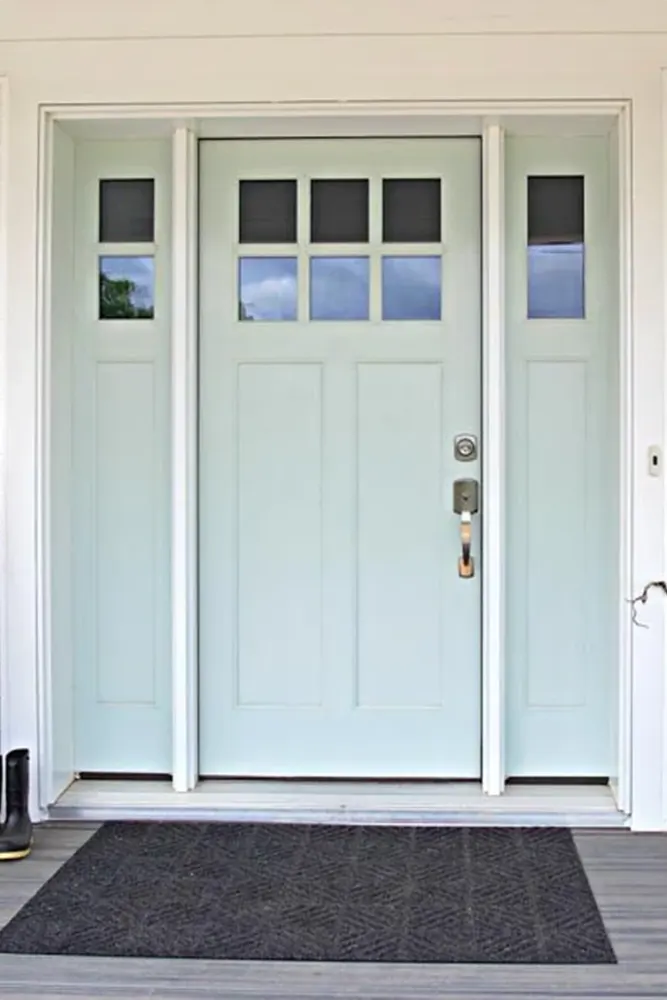
Trim Colors to Pair With Benjamin Moore Palladian Blue HC-144
Trim is what frames the whole look, so getting it right matters. Here are three trim colors that work beautifully with Palladian Blue:
- Benjamin Moore Chantilly Lace OC-65 — This is a crisp, clean white with no strong undertones, and it gives Palladian Blue a sharp, classic contrast. It is my top pick for a timeless, pulled-together look.
- Benjamin Moore White Dove OC-17 — A softer, slightly warm white that takes the edge off the cool tones in Palladian Blue. If you want a cozier, more relaxed feel, this is the one.
- Benjamin Moore Simply White OC-17 — A bright but not harsh white that complements the lightness of Palladian Blue without competing with it. It keeps things feeling clean and modern.
Colors Similar to Benjamin Moore Palladian Blue HC-144
Finding the right paint color is rarely a straight path. Sometimes you fall in love with a color like Palladian Blue but want to explore what else is out there before committing — maybe you want something slightly softer, a touch more green, or just a tiny bit darker. That is completely normal, and the good news is there are several colors that live in the same neighborhood as Palladian Blue.
These similar colors share that same quality of being a muted, soft blue-green that leans toward the lighter, airier side of the spectrum. Some are slightly more blue, some pull greener, and some carry a bit more gray.
Having a list of alternatives is also useful when you are trying to create a cohesive color scheme across multiple rooms — you might use Palladian Blue in one space and a close relative in an adjoining room for a layered, harmonious look. It is one of my favorite ways to add depth to a home without making things feel mismatched or chaotic.
These options give you flexibility without straying too far from the feel you are going for.
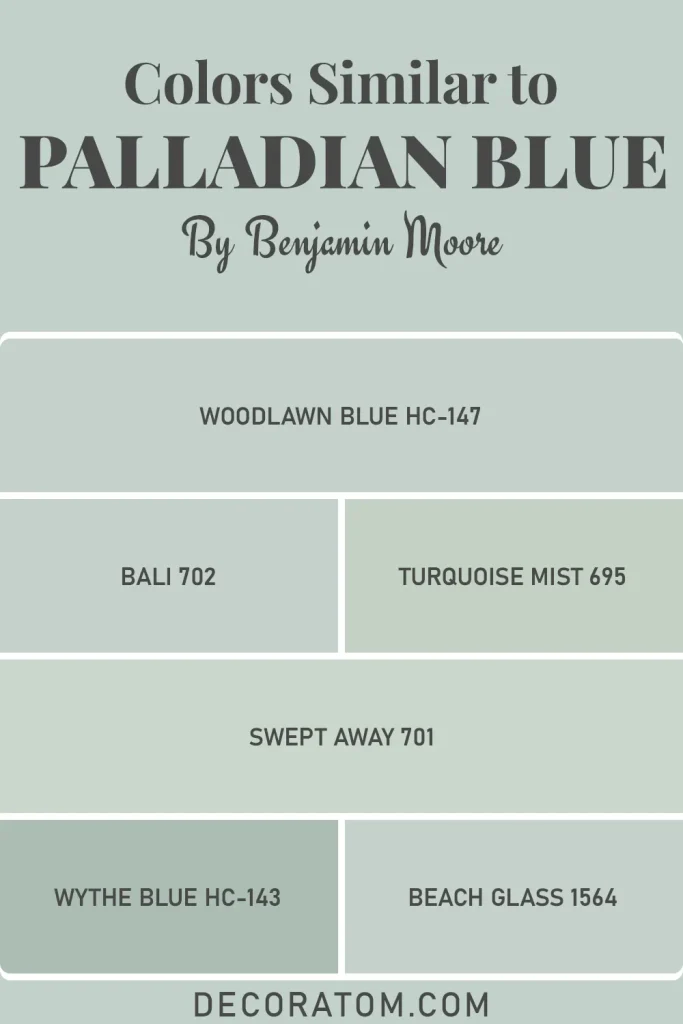
- Benjamin Moore Woodlawn Blue HC-147
- Benjamin Moore Bali 702
- Benjamin Moore Turquoise Mist 695
- Benjamin Moore Swept Away 701
- Benjamin Moore Wythe Blue HC-143
- Benjamin Moore Beach Glass 1564
Colors That Go With Benjamin Moore Palladian Blue HC-144
Palladian Blue is one of those wall colors that actually plays nicely with a wide range of other colors, which is part of why I keep recommending it. It has enough neutrality in it, thanks to those gray and green undertones, that it does not clash easily. But like any color, it shines brightest when you pair it with the right companions.
The goal when coordinating colors with Palladian Blue is balance. Since the wall color is cool and soft, you can either lean into that and keep the whole room calm and serene, or you can bring in a warm accent to create contrast and keep the space from feeling too one-note. Both approaches work, and both can look stunning depending on your personal style and the function of the room.
I personally love adding a warm earthy tone or a deep accent to a room painted in Palladian Blue — it grounds the lightness and makes the space feel lived-in and intentional rather than just pretty. The coordinating colors below do exactly that, giving you a balanced, complete palette to work with.
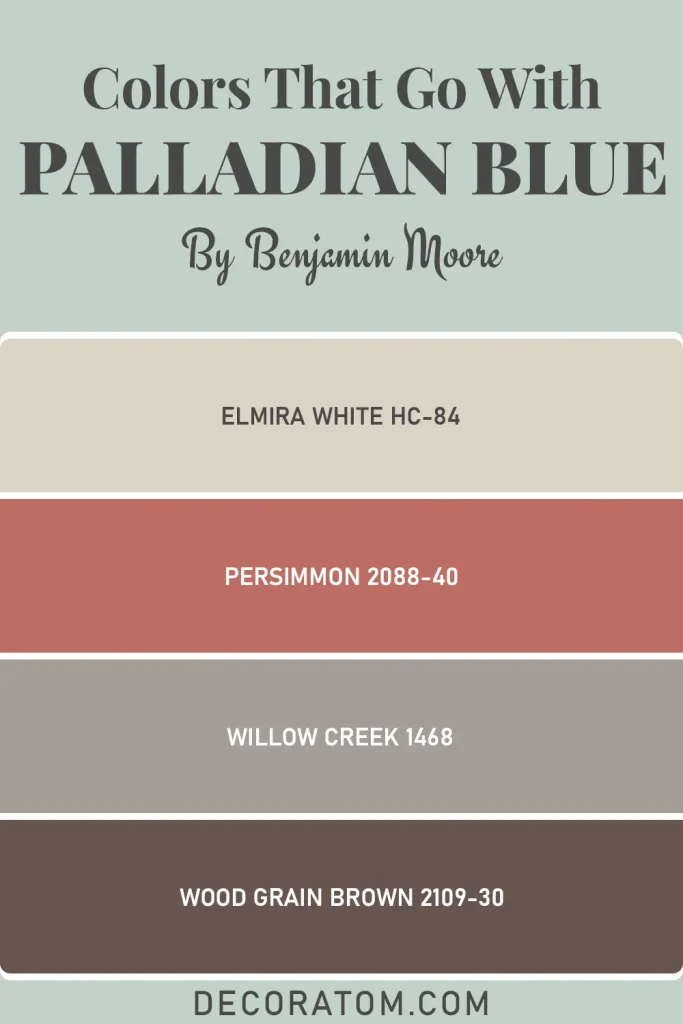
- Benjamin Moore Elmira White HC-84
- Benjamin Moore Persimmon 2088-40
- Benjamin Moore Willow Creek 1468
- Benjamin Moore Wood Grain Brown 2109-30
Where to Use Benjamin Moore Palladian Blue HC-144?
Palladian Blue is an incredibly versatile color, and that is one of the reasons I keep coming back to it. Here is where it works best:
- Living Rooms: It creates a calm, welcoming atmosphere that works for both relaxed everyday living and more formal settings. It makes the space feel curated without being overdone.
- Bedrooms: The soft, cool tone is genuinely restful. I have seen it in master bedrooms and guest rooms, and in both cases it creates that hotel-like serenity that most people are chasing.
- Bathrooms: This is where Palladian Blue really earns its reputation. The blue-green undertone gives bathrooms a spa-like, refreshing quality that feels intentional and luxurious.
- Kitchens: Used on an island, lower cabinets, or even all the walls, Palladian Blue brings a light, airy freshness to kitchens without overwhelming the space.
- Home Offices: The cool, muted tone is actually great for focus. It is calming without being sleepy, which makes it a surprisingly good choice for a workspace.
- Hallways and Entryways: Because of its medium LRV, it handles both well-lit and dimmer transitional spaces without looking too dark or washing out entirely.
- Exterior Use: Palladian Blue has a classic, New England coastal feel on home exteriors, especially with white trim. It photographs beautifully and holds its character in natural light.
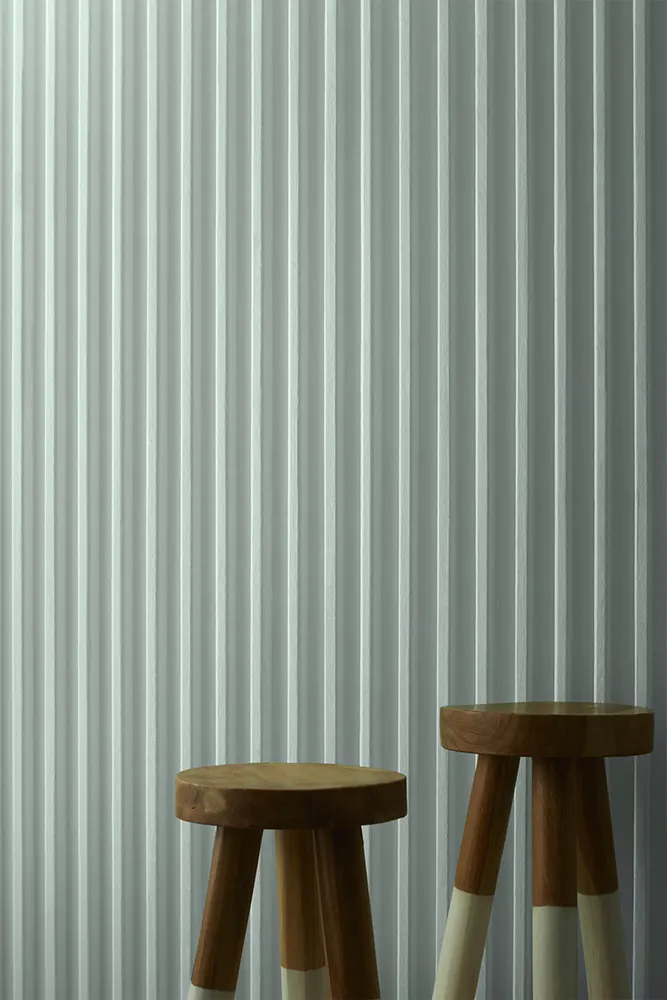
Why I Love Benjamin Moore Palladian Blue HC-144
Honestly? I love it because it does not try too hard. There are so many paint colors out there that feel like they are performing — they are too saturated, too on-trend, or too try-hard. Palladian Blue just exists. It sits quietly on the wall and makes everything around it look better.
What gets me every time is how it handles light. I have seen it in rooms at different times of day, and it shifts in the most satisfying way — a little more aqua in the morning, a little more gray-blue in the evening. It never feels flat or static. It is like the room itself feels alive.
I also love how livable it is. It is not a color that makes you nervous about your furniture choices. Neutrals work with it, warm tones work with it, even deep jewel tones look great next to it. It is genuinely one of the most low-pressure colors I have ever worked with, and that matters a lot when you are trying to make a space feel cohesive.
And at an LRV of 60.4, it keeps rooms bright and open — something I always care about. I am not a fan of colors that make a room feel smaller than it is, and Palladian Blue does the opposite. It opens things up.
Final Thoughts
If you are on the fence about Palladian Blue HC-144, I hope this walkthrough gave you enough to make a confident decision. It is a color with real staying power — it has been popular for years and still looks fresh, which tells you something about how well it is designed.
My honest advice: get a sample, put it on the wall, and live with it for a few days. Watch it in the morning, at noon, and under your evening lights. I am willing to bet it surprises you in the best way.
It is not the flashiest color on the Benjamin Moore palette. But it might just be the one that makes your home feel exactly the way you want it to feel — calm, bright, and completely put together.